Friday, June 10, 2011

Fahrvergnügen

I don't consider myself a car-dependent person.  I haven't personally owned a car since 2006, and haven't even hard a (working) car in the household for well over two years.  I believe in living, whenever possible, in walkable neighborhood with good public transit access.  (Realizing that the ability to do so is absolutely a function of class, and in some situations no matter how much money you make, it's simply impossible.  However, do I turn my nose up at middle-to-upper class people in the Bay Area who choose to live in suburbs with no public transit?  Yes, yes I do.)  In general I think cars are frustrating money-pits and I can do without one, thank you very much.

This feeling solidified when we moved to Germany, since the U-and-S-Bahn systems are fast and efficient.  We made a point of getting an apartment in a neighborhood with access to pharmacies, grocery stores, restaurants, and as close as possible to an U-Bahn stop (we're literally 5 minute walk from one).   Meanwhile, driving in Germany seemed terrifying.  The rules are the road are different enough from the U.S. to be confusing.  The streets are narrow and parking is often non-existent.   The high-speed car thoroughfares in the center of the town looked daunting, German drivers appeared aggressive, and the autobahn with it's lack of speed limits?  Forget it.  I had no interest in driving here.
Surprised that I love a Ford this much!
And yet, within the space of a week, I passed my drivers' test, bought a car, and have been tearing up German roadways including a 4 hour-round trip into another state - on the dreaded autobahn.  And I'm loving it.

Truth be told, I feel a little guilty for being so enthusiastic about rejoining the driving class.  But there's a few good reasons why I am:
1. We moved into an apartment nearly twice the size of our previous one, and made the sensible (?) decision when we left the states to get rid of old, crappy furniture instead of having it shipped overseas.  We needed to buy a LOT of stuff.  Some of the larger items, like a bedroom set for our guest room, and a sofa, we were able to rent.  But when it comes to storage, shelves, chairs, lamps (remember kids: European apartments generally come without lighting fixtures!  I had to buy 14 if you can believe it.), 220 volt appliances - we needed all this stuff and we very quickly learned that trips to IKEA are just not that productive sans car.  I have accomplished more with regard to getting set up in our apartment in the last two weeks than I had in the previous two months.

2. While Germany's public transit system is fantastic, it seems that the Germans are practically American when it comes to public transit access to the American bases.  There are four "barracks" in the region, all within a 20-minute drive of each other.  Three of those bases we have to go to on a regular basis - one for work, one for all administrative stuff plus the Exchange department store, the other for the American grocery store (the commissary).  Now while it's true that in most cases for us, shopping "on the economy" (i.e. at German stores) is more efficient, sometimes you just need stuff from one of the American stores.  Like American peanut butter.  Or decent Tequila.  Or a large books and magazines in English.  Even though we live less than 5 miles from the base where Chris works and the base with the commissary, getting to either one via public transit takes over an hour, mostly because for both the nearest public transit stop is a 20 minute walk to the base itself.  In a car, it's less than 15 minutes to either.  Given that Chris has to be on base 13 hours a day for his shifts, having a car actually gives him time to relax after work, as opposed to needing to go to sleep as soon as he gets home in order to catch 8 hours.

3. In retrospect, driving in Germany isn't that scary at all.  The strange elements - unmarked intersections with a "yield to the right" rule - are usually in areas where you're driving slowly anyway.  Most other issues are minor - streetlights are on your side of the intersection as opposed to across it or in the middle, which takes some getting used to, but isn't hugely stressful.  German drivers may drive fast when they can, but they also so far seem pretty predictable in observing the rules of the road, far better than Americans.  A guy may be blowing past you at 130 mph on the Autobahn, but as soon as the speed limit is enforced, he slows down to 120 kph just like the rest of us.  They're great at merging, and are less likely to cut you off.

I've only had one really stressful driving incident so far, but my reaction to it surprised me.  After dropping Chris off at work, I drove home via surface streets.  At one point I'm on a narrow street with lots of pedestrians, and the speed limit was 50 kph (30 mph).  A SmartCar came up behind me and started tailgating me.  I was going the speed limit (which already felt pretty fast on that street) and maintained it, and then he honked at me.  The nerve!  So I flipped him off and spent a lot of time at the next light glaring at him in my rear view mirror.  He actually illegally passed me at the next light, which was ridiculous because then he was stuck behind two more cars making their way down the hillside road at the same speed I did, but I did delight in tailgating his ass down the mountain.  Mature?  Not really.  But this Apple-sticker loving douchebag brought out my inner Bay Area driver, and the sense of deference and shyness that I generally have when interacting with Germans evaporated.  Because he was driving like an asshole, regardless of location, and I had no trepidation about letting him know it.

Strangely, something I  feared for months has actually been very empowering in practice.  I no longer feel like a confused, house-bound hausfrau.  I'm in charge of the road, baby, and I can go anywhere.

Wednesday, June 8, 2011

Tackling German Recycling

Those of you who know me well know that I'm a little lazy when it comes to recycling.  It's not that I don't care about the planet, it's just that I'm lazy and easily distracted and back in the States that meant that I was pretty good about recycling glass and that's about it.  I'd recycle paper if I had a huge chunk at once but I didn't have multiple trash cans for various kinds of refuse and certainly didn't sort through my trash to dispose of it properly.

Well, good ol' German thoroughness has cured of me this.  I realized I'd fallen hard for the system here as I caught myself literally going through every trash bin in the house to separate out paper and plastic packaging.  Not because I think the German system is particularly inspiring or easy - it's actually a frustrating pain in the ass - it's just that I fear of reprisals from angry German neighbors is a great motivator.

According to various military documents, the biggest complaint Germans have about their American neighbors here is improper disposal of trash.  I already feel like a bumbling idiot most of the time here, and I really have a fear of pissing my neighbors off from the get go, so since we moved in I have been trying to recycle properly.

Problem is, this takes a degree of information that generally can only be found in German on German websites if you can even figure out how to search.  Thank god for the Internet and Google Translate, but it's still been a few months to figure out the whole system.  Let me see if I can break it down for you:

Glass bottles must be taken to a neighborhood recycling bin, which are relatively few and far between.  Mine is 4 blocks away.  There, you separate green, brown, and white glass into the bins.  You can't do this after 10pm or on Sunday, because it's too noisy.

Oh!  And if your glass bottle is the kind you paid a pfand (deposit) on, you instead take it to the store where you can either put it in a machine or have it tallied up by a person, and are given about 5 cents a bottle.  This is generally for beer bottles, but also for wine bottles over 0.75 liters.  And sometimes some other kinds of glass bottles.  How do you know which ones?  Sometimes it tells you on the bottle, but sometimes not.  Be careful - there are some bottles that have a pfand that will not be accepted by certain stores, if the store does not carry that brand.  Confused yet?  Oh, it gets better.

Paper and cardboard are put into a bin at your house or apartment, pretty similar to the U.S.  Except milk cartons.  Milk cartons are considered "packaging" and are sorted into the bane of my existence:

DER GELB SACK (aka "the yellow sack")
Gelbsackzeit is the most beautiful time of the month.

Instead of another bin for all plastic, some metal, all foil, and occasionally some paper-composite packaging, the Germans have concocted a system where you put all those items into these special yellow sacks which are picked up...once every three weeks.  Why every three weeks?  Who knows?  But I was pretty excited when I found a website that told me the dates of gelb sack pickup.  Because if you miss your gelb sack deposit, that packaging really starts to add up.  Let's just say that my "pantry" has been more of a trash holding center for the last couple of months because I hadn't figured out how to do the whole gelb sack thing yet.

Where do you get the gelb sacks?  Some people's landlords are nice enough to provide them to you, but not mine.  You can also get them from your garbage collectors, if you catch them (I never do).  A website finally told me I could get them at my local apoteke (pharmacist) of all places.  So today I filled up four gelb sacks and now they are picturesquely piled on top of the mounds of my neighbors' gelb sacks, in ordnung.  Which is cool because that means that this week the only refuse I have to deal with is ... glass (both types) and filling up the paper bins again with cardboard from IKEA purchases.  Which, while being proper trash disposal, probably isn't endearing me to my neighbors either.

After you've caught up with all that, everything else goes in a regular trash bin.  I guess some people compost, but I don't have a bin and frankly, I don't have the time.  Next time someone asks me, "What do you do all day?"  I'm just gonna say, "Oh, I recycle."

Tuesday, May 24, 2011

European Celebrities to Love: Jean DuJardin

So when you move to a new country, you spend a lot of time feeling alienated and confused.  The language is different, the media is foreign (or it's "Two and a Half Men" dubbed into German - even worse), and you spend a lot of time staring blankly, understanding nothing.

But while sipping pastis at a beachfront cafe in Marsielle (which, by the way, is a pastime I highly recommend) a  music video came on.  It was utterly ridiculous - it appeared to be an aged stereotypical surfer guy in baggy pants, rapping in French.
And while trying to figure out what's going on, I realize - I KNOW WHO THAT IS.  IT'S JEAN DUJARDIN.
Now, I know you're looking at this glorious specimen of Gallic manhood and wondering, "How is this man not famous world wide on his pretty face alone?"  Well, he's actually a household name in France, getting his start in comedy sketch shows (the surfer character, "Brice from Nice" was developed as a film, in the style of an SNL film) but became a major movie star with "OSS 177: Cairo, Nest of Spies" which is a hilarious spy caper.  It's sort of like a French Austin Powers, except it's based on a book series that predates James Bond.  The books (and following older French movies) are serious, but the new version mocks the conventions of the era.  It was hugely popular, and led to a film career for DuJardin, as well as a sequel (both are available on Netflix streaming, so you have no excuse not to watch!)

What I find so lovable about DuJardin is that he's both an amazing physical comedian trapped in the body of a gorgeous leading man.  He's comparable to Hugh Jackman in that way, except DuJardin tends to take roles that play to his comedic side as opposed to silly superhero stuff.

And why mention this now?  Well aside from a general community service of bringing greater attention to the glory that is DuJardin, I'm also prepping you for the fact that you're going to be hearing a bit about his new film, which happened to be the surprise hit at Cannes and earned DuJardin the Best Actor award from the festival. 


The movie also stars two of my favorite American character actors, John Goodman and James Cromwell.  It will be coming to the states soon.  I'm hoping that since it's almost entirely a silent film, I won't have to worry about finding an English subtitled version here in Europe.


You're welcome, America.

Trip Report: Strasbourg

I am a terrible blogger.  Of this there is no doubt.  Since our last trip report, we've been to three major French cities and one German one, and there's always stuff we're checking out locally.  We're busy, but I have no excuses!  So let's just get on to the pictures.

Strasbourg is the capital of Alsace, which is famous for it's own cultural sensibility and regional cuisine.  Having been controlled both by France and by Germany throughout it's tumultuous history, what remains is a unique character that's neither specifically French or German but obviously has elements you can identify from both.

Situated on the Ill river, just across the border from Germany, Strasbourg is a convenient 100 minute jaunt from Stuttgart on a high-speed TGV train.  This was our first time taking a TGV train and it was a pretty pleasant experience, even if the magenta, orange, and purple color scheme seems a bit jarring.  We arrived mid-morning and were able to check into our hotel, located right across from the train station, roughly a 15 minute walk to the old town.

One constant I've observed for cities in Germany and France so far is that the old town is always where the cool European-lookin' stuff is that us American tourists crave so much.  But Strasbourg is really set apart in just how very medieval it is.  Narrow cobblestone streets wind through ancient homes and quaint storefronts.  It's ridiculously romantic, without seeming precious or cutesy.

Undoubtedly, the focal point of the old town is the Notre Dame cathedral.  Yep, they've got a Notre Dame too!  Turns out a lot of churches use the same names.  And honestly, now that I've seen the famous one in Paris, I have to say that the Strasbourg cathedral is actually the more impressive.  I can't convey how breathtaking it is and I'm afraid my pictures don't do it justice.

One of the coolest things about Notre Dame is the glorious rust color the local sandstone gives the structure.  This is even more amazing in the late afternoon, when the setting sun illuminates the west facade to the point where it almost seems to glow.  I won't go on too much about the technical details or the history: what's important to know is that it's one of the finest examples of high gothic architecture and for a time was the tallest building in the world.  Thanks, Wikipedia!  For those who don't know, the Gothic style, which came about in the Middle Ages, is essentially reminiscent of the thin spires and "airyness" that you can see in this photo, as contrasted to the previous style, Romanesque, which was far more massive and "blocky".  (I should've paid more attention in art history class, ja?)  Needless to say, Gothic is my favorite style, due to the stylish intricacy that is typical.  Notre Dame in particular is decorated with a stunning amount of statuary and bas-relief depicting in many cases some of the weirder and more gruesome aspects of the Bible.  It's hard to get bored looking at this building.

This is an example from the west door frame.  Those scary-lookin' ladies represent virtues and the pitiful creatures they're spearing are vices.  Above them are scenes of martyrdom.

The inside is really cool too, with towering stained-glass windows and loads of cool features that I don't know that much about.  Nor did any of my flash-less interior photos turn out very well.  It's worth reading about the crazy astronomical clock inside.

You can also climb to the top of the cathedral, although they don't tell you uh, how far up it is.  Let's just say that had I known in advance I probably wouldn't have done it.  Endless spiral staircase from hell.  But the view from the top was more than worth it.  Even if it made me feel kind of sick.  Honestly I could just go on about the cathedral all day, it's just that amazing.  And adjacent to the cathedral is a building that houses a lot of the original statuary, which is even more impressive up close.

But it wasn't all old statues (the one to the right is from the 14th century though - doesn't that just blow your mind?) and God stuff.  Strasbourg has a vibrant food culture that highlights one of my favorite ingredients of all time: foie gras.  I'm not going to get into the ethical issues in much detail, except to say that anyone who judges me for eating foie gras while eating factory-farmed meat (i.e. 95% of the meat available in the U.S.) can kiss my ass.  It's doesn't matter, anyway, because the hand-wringing about the supposed brutality of foie gras production - made by fattening the livers of geese and ducks, sometimes via a short force-feeding process - is really only a big deal in liberal cities in San Francisco and Seattle.  Nobody in Alsace seemed vaguely aware that this delicacy inspires heated protest in some parts of the States.

I got my proper gorging on my beloved liver at the famous restaurant Chez Yvonne.  It was a pricey lunch, relatively speaking, but man oh man was it worth it.  Chris had some sort of organ meat dish, but I went for an all-foie gras plate, which included 5 different preparations, all equally delicious and way too rich.  Even though it was only an appetizer I could barely finish it.  It was also served with a very surprising and light Alsace version of sauerkraut.  Alsace is also known for it's Rieslings and Gewurztraminer wines, which we certainly indulged in.  The setting was super traditional and rustic, complete with photos of all the various politicians and celebrities who frequent what is apparently a Strasbourg institution.

We had so much amazing food, and honestly I didn't take notes at the time so it's hard to remember.  Fantastic crepes served by a surly chef across from Notre Dame.  Warm roasted chesnuts from a stereotypically French and flirty vendor in the square.  An innovative, if not particularly memorable 3-course meal at Goh Restaurant.  And pictured, a delightful and amazingly cheap meal of flammkuchen/tart flambe which is essentially a savory, crispy pizza, traditionally made with ham and local cheese.  We enjoyed it at Académie de la Bière, which has over 70 beers and ciders on tap, many of them Belgian. While I do appreciate the quality of German beer, getting a large variety of types to choose from is not particularly easy to do in Stuttgart, which made La Académie a wonderful and very atmospheric stop.


There is, of course, more to Strasbourg than the cathedral and food, but our quick trip was just an overnight one, so we didn't have time to do much more than stroll around the old town.  But we were certainly enthralled with this often overlooked city and can't wait to return.  We have lots more pictures up here, so be sure and check them out!

Thursday, March 10, 2011

He-He-Heidelberg!

Dear Faithful Readers (aka our parents),

We apologize greatly for the huge gap in our blog entries. There's no excuse for it really, it's not like we really haven't had the time in the last month to post a few pictures and words up, it's just that we're lazy. And since most of the planned entries are about traveling, it becomes a lot harder to remember what the name of that one Romanesque cathedral in Tuebingen was or whatever, which makes the process of updating more tedious, because I have to look it up. Anyway. Let's slog through some pictures of Heidelberg, which we went to like, more than a month ago!

Puttin' on my tour guide voice now. Heidelberg is a famous University town because it was German's first university town. Although it's located in the present-day state of Baden-Wurttemberg, like Stuttgart, historically Heidelberg was the former location of the Electoral Palatinate, and we still haven't quite figured out what that means, but it had something to do with the dizzyingly complex politics of the former Holy Roman Empire. As far as I can gather, unlike Stuttgart, Heidelberg is not part of Swabia and culturally and historically is more associated with the Rhineland, which is also nebulous geographically and culturally. The city was founded in the 12th century although settlements existed before that. The University was founded in the early 1400s, and the city became the center of the influential German Romantic movement in the beginning of the 19th century. So you can thank Heidelberg for Byron, sort of. It is also next to the town of Mannheim, of the steamrollers.


Heidelberg's main landmarks include this bridge over the Neckar river, the University, and it's castle up on the hillside. The old town consists of the largest pedestrian zone in Germany, and is full of shops, restaurants, historical parts of the University, and churches.


This is the Knight's House from 1592. It's pretty.


The "Schloss" (which is German for castle or palace) in Heidelberg is a mishmash of styles, since people have basically been building and adding to it over the course of centuries. This is the Fredrichsbau, built in the early 1600s. The figures are the family Wittlesbach counts, and they trace their line from Charlemagne, who is represented as well.


The castle also includes a ginormous wine barrel, straight out of my most fevered dreams. Legend has it that the court jester died as a result of drinking the entire barrel. They have a monument to him, which is fitting. Chris does not believe this actually happened.


Since the schloss is on a rocky outcrop above the city, it provides amazing views. Also they provide hot spiced wine in to-go cups for touring the palace, which is pretty thoughtful of them.


The schloss courtyard


The castle is under renovation, and huge parts of it are ruined, thanks to the French destroying it with cannons on more than one occasion.


Another view of the city.

Heidelberg has three beautiful and historic churches, but none of my pictures of them turned out particularly well. Unsurprisingly, Heidelberg also had a large Jewish community at various times throughout history, and many taught at the University, although various anti-Semitic laws often prevented Jews from being full professors. The Nazis re-introduced those rules after a century of tolerance, and during Krystallnacht the old Jewish synagogue was destroyed. A memorial is there today.


Being a university town set between forested hills and students on bikes, it doesn't feel unlike Berkeley, if Berkeley had a big river and tons of 18th-century buildings. Ok, so it's not really like Berkeley, but there are chaat places and more international cusine and hip bars than you generally find in historic German towns. The fact that Heidelberg is the warmest city in Germany and has quite a few Mediterraneans plants and orchards gives it a lush air, or so I'm told. It was February when we visited!


All in all it was a lovely place to visit with a host of museums we didn't get to check out, so we're looking forward to returning and enjoying the famous warm weather later in the spring.  You can check out a lot more pictures at our gallery here. And now I leave you with: a monkey.

Monday, February 14, 2011

Esslingen Part 2: The Revenge

Unfortunately, in the time I've been too lazy to update this blog, our little visit to Esslingen seems far past, as we've gone to Heidleberg, home to Germany's first University, as well as Strasbourg in France. Returning to finish our posts on Esslingen seemed slightly anti-climatic, as charming as it was. But I will soldier forth.


This photo isn't related to medieval architecture or history. It's just some weird, weird German advertisting. Is it a dentist's office? Ads for a fruit-based sequel to "Little Shop of Horrors"? Who knows?


It is frustratingly difficult to get information about Jewish history from the information centers, so we hadn't realized we stumbled upon the site of the former Jewish ghetto from the 1500s until Chris noticed the street name "Judengasse" ("Jews' Alley"). Although it now feels central, at one time this "suburb" was outside city walls.


Speaking of city walls, this is the "Wolf's Gate" and is the only remaining tower from the walls that used to protect the city. It was constructed in 1268.


Being the uh, athletic types we are, we walked up the hillside (with the intention of finding another historic building that I didn't realize was at the top of the hill) and stumbled upon the park in front of Esslingen's "castle." It wasn't a residence for princes, but rather the fortification for the city. The tower is called "Dicker Turm" which means "fat tower."


The tower houses a restaurant - booked that day for a wedding party full of unruly kids - and boasts an amazing view of the city.


The old city hall dates from 1420 and includes a moving clock, like so many important German civic buildings. In front of the building is a monument to the local people who died in World War I.


Esslingen has 3 important churches, the largest of which is St. Dionyus, seen here. It's now Protestant.


The Romanesque "Women's Church" just a few blocks away is notable for the detailed outside decorations, including scary gargoyle animals like this owl.


This decoration at the Women's Church of Judgement Day seemed pretty impressive, but just yesterday I was at one of Europe's great cathedrals, Notre Dame De Strasbourg, which is just breathtaking. Still - Esslingen was my first introduction to medieval churches and all three are lovely.

Coming VERY soon: Heidelberg and then Strasbourg!

Tuesday, February 8, 2011

Germany Loves Musicals!

I haven't gotten around to finishing our posts on Esslingen, mostly because I've been too fascinated by two German musicals.  You see, we're staying at a hotel at the "SI Center", which is a big complex full of restaurants, shops, and a movie theater.  But the anchors of the property are the two large theaters, which show international and German musical spectaculars.  "Wicked" was playing here until recently and will be again this summer, but the two current musicals are "Tanz Der Vampire" ("Dance of the Vampires) and "Ich War Noch Niemals in New York" ("I've Never Been To New York").  Judging by the huge evening and Sunday crowds, both are still very popular.
The advertising for "Tanz Der Vampire" seen here is literally all over Stuttgart.  We found this image improbably cheesy and obviously trying to capitalize on the "Twilight"-induced craze of brooding, protective Vampire dude his fragile human love interest.  So I was pretty surprised when I finally looked up the show and realized it wasn't primarily a star-crossed romance between the living and dead, but rather a musical based on a 1969 Roman Polanski horror-comedy (known as "The Fearless Vampire Killers" in the U.S.).  Now I realize we have a whole untapped field of rich source material: Polanski films!  Just imagine the song titles! To make things more bizarre, Polanski even directed the original German version of the musical.  Who knew he had directed a musical?  Crazy Euro secrets.

The show premiered in Vienna in 1997, and what is currently playing here is the 2009 revival.  It's been a huge hit all over German-speaking Europe, so (American) composer Jim Steinman naturally wanted to bring the show to the English-speaking audiences, and that's where the story gets really weird.

Jim Steinman is the guy responsible for some of pop music's most overwrought songs, including (but not limited to) "I Would Do Anything for Love (But I Won't Do That)", "It's All Coming Back to Me Now" and "Total Eclipse of the Heart", which incidentally is used, irony-free, in "Tanz Der Vampire". 

 
Anyway, the American production had a lot of problems.  The German version seems to be mostly "sensuous, gothic horror" (that's how fans of the musical describe it, anyway) but that sort of thing would obviously just seem ridiculously campy to Americans, so the creators decided to try to play up some of the more comedic and lewd aspects.  Famous, venerated Broadway veterans were brought in to redo everything from costumes to choreography to sets.  Broadway heavyweight Michael Crawford (i.e. the original Phantom of the Opera) and awesome character actor René Auberjonois (Odo from "Star Trek: Deep Space 9") were cast in lead roles.  Unfortunately Crawford had aged and widened considerably since "Phantom" debuted in 1988, and this was apparently "hidden" behind lots of makeup and costume modifications - think ruffles, lots of ruffles. 

Production continued.  Millions were spent. Many efforts were made to bring Polanski to the States to reprise his role as director, but he ran into some legal issues due the fact that he is a justice-fleeing child rapist.  (Whoops, what a shame that got in the way of your big Broadway debut, Mr. Polanski!) 

To make a long and increasingly hilarious story short, the show suffered from the "too many cooks" syndrome and never found a consistent tone.  Some people didn't care for the stereotypes used for a Jewish innkeeper (who sexually harasses his shiksa maid) and a swishy vampire who tries to seduce the male lead.  

But really, it seems to me the failure of "Dance of the Vampire" had less to do with its numerous production problems and more to do with the fact that a schlocky, serious, scary, romantic, gothic vampire rock opera musical spoof that depends on a puffy, washed-up Broadway legend for sexual magnetism was probably the worst idea of all time.  

It had the stink of a bomb well before it premiered, and critics seemed delighted that it lived up to the hype:

The show closed quickly after it premiered, but "Tanz" lives on in Germany.  What I want to know is, was the American version so terrible, or is it just that American audiences might have significantly different tastes?  Watch the clip of the exalted German show below and let me know what you think.


(And yes, I am trying to convince Chris to take me for Valentine's Day.  What could be more romantic?)

Sunday, February 6, 2011

Esslingen Am Neckar

On Saturday we were greeted with a (relatively) gorgeous day - sunny, with highs in the mid-40s, and a light breeze. After literally weeks of snow, drizzle, and clouds it looked and felt amazing. We decided to take the opporunity to visit a gem right in our own backyard, the largely preserved medieval town of Esslingen-On-The-Neckar, just 15 minutes from downtown Stuttgart via S-Train.


Most of the town's streets look like this: narrow and paved with cobblestones, filled with half-timbered houses from the early 14th century, as well as more magnificent baroque buildings and several important gothic churches. The town existed prior to 777, when it was first recorded in Catholic church records. It was an important trading post when Stuttgart was barely more than a village, a stopover on the route from the Rhine valley to Italy.


This statue tops a fountain dedicated to the "Postman Michael", and relates the 15th-century legend of a postman who found the signet ring of a local rich man on his travels.


He mistakenly shows off the ring at a tavern in Esslingen, unaware that the man to whom the ring belonged was very rich and recently murdered, with the killer unknown. Unsurprisingly, he is charged with the murder and confesses after horrific torture. On the way to his beheading, he passes the relative of the rich victim and realizes that he is the killer, but no one heeds him. He's killed, but every year he torments the real killer, blowing his postmaster's horn and riding around with his head cut off, until the true killer not only confesses his misdeed, but also donates his ill-gotten fortune to a fund to provide all travellers through Esslingen with a small donation.


Next to come is part 2 of Esslingen: The "castle" and the amazing churches!


Sunday, January 30, 2011

What's Wrong With California Wine?


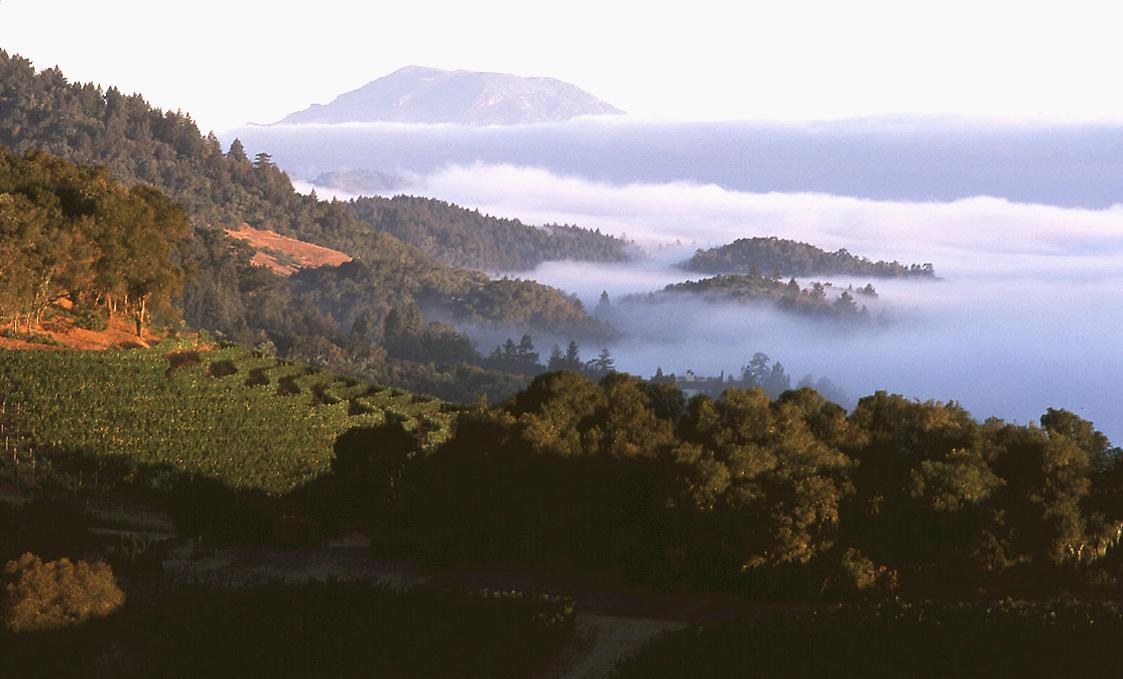
I miss you, California vineyards!
So far there seems to be only a handful of products I'm used to that will be difficult if not impossible to obtain here. The first is California wine. I'd heard that Europe was notoriously snobby about our "upstart" wine industry, but I'd figured that was largely a thing of the past. ABSOLUTELY NOT. German, French, Italian, and Spanish wines are not only plentiful here, but also very cheap by US standards, and that's great - but I'm a California wino, and let's face it, wine varies greatly by region to region. You get used to certain grapes, certain styles. German wine trends towards sweeter and fizzier than I'm used to - they love their sparkling wine (sekt) and it's common everywhere, as is the Italian version (proscecco). As far as white wines go, the familiar Chardonnay and Sav Blanc is hard to find unless you go French - Germans specialize in Riesling largely, as well as some minor white varietals that most Americans have never heard of. They do make dry Rieslings, but it's no substitute for a grassy, herbaceous Sav Blanc! Red wine fans have even less to be excited about. While the Wurttenburg wine region grows more red grapes than anywhere else in Germany, they favor a red grape known as "Trollinger" that reminds me of a sweeter Gamay (which makes France's famous Beaujolais wine). It's slightly carbonated and light, and is far better chilled than room temperature unlike most reds. Nice perhaps in the summer but I'm missing big California Cabs for sure.
When California wine is on the menu or at a store, it's the wineries that even the least pretentious quaffers raise an eyebrow at. I have literally seen Gallo as the ONLY California offering on several wine lists. At the fancy German market, the only California wines were Fetzer and a very expensive Russian River Chardonnay. (Estimated time before I break down and buy it anyway? I give it a few weeks.)

Stuttgart IS famous for it's wine...
Maybe I shouldn't have been surprised, but the wine clerk was predictably snobby about California wines. He first spoke to us in German, then when he realized we were English speakers, assumed we were British. It this a compliment or an insult? Once we revealed ourselves to be boorish Americans looking for the wine of our homeland, he got a little pissy. "Uoo zee heer in Europe, ve are not caring zo much about ze American vines." No shit, dude, I could tell by the fact that you only included 4 bottles of mediocre California wine out of your selection of hundreds. There is quite a bit more South African and Chilean wines available here than Californian. (Not that S. African and especially Chile don't make some great wines, I'm grateful for that at least!) But really, you'd think that for a wine region that is considered to be at least the 2nd best in the world even internationally wouldn't be so snubbed, particularly considering that nearly every major restaurant and wine bar in the Bay Area features a ridiculous amount of European wine. Wanna return the favor, guys?

Food in Swabia - Shopping

So I may have jumped the gun in believing some of the stereotypes about the German palette (see the previous post about my Bay Area foodie bucket list). Contrary to what I'd heard and assumed, a wide range of products and ingredients that I commonly use for cooking can be found here, albeit not in normal grocery stores. I think the fact is, large metropolises are maybe not that different worldwide - regardless of the local cuisine, any city with an international population (and it is estimated that 1 in 5 Stuttgarters are not German-born) is going to have a diverse range of ingredients available.

My first realization of this took place on our very second day in German, when I visited Stuttgart's famous Markthalle (Market Hall). I wanted to compare it to a more practical version of San Francisco's Ferry Building Market, until I realized that our market was probably largely based on European markets! Stall after stall of high-quality meats, cheeses, produce, and speciality food products from all over the world. I was delighted to recognize familiar ingredients such as high-quality tortillas and habaneros, and excited to try some produce I'd never seen before, not even at the famous Berkeley Bowl. And truffles (the fungus, not the confection) for reasonable-ish prices! Totally a foodie's dream.

A week later I found the German equivalent of "Andronico's" or "Whole Foods" in the city center, where I found even more international products. While I don't regret my last-minute shopping spree at Richmond's Ranch 99 (A Chinese-American supermarket chain that carries a huge selection of products from all over Asia) I was relieved to see high quality Shoyu (soy sauce), Sriracha (a Thai chili sauce), Sambal Oleck, soba noodles, and other condiments and products I utilize on a regular basis.

There is also a large farmers' market in front of the Rathaus (City Hall) three times a week, which carries almost all the basic kinds of produce I'd see at the Grand Lake farmers' market in Oakland (winter veggies, herbs, eggs, chilis, olive oil, honey, wine, citrus and some other fruit) as well as a few new exciting varieties of European winter squashes. I did get the impression that some of the products came from a bit further away than a California farmers' market would have - I saw that some of the produce was from southern France, Italy, and Greece - but then again Californian markets often have produce from all the way across the state, so it's not that huge a difference for a half-hearted, wannabe localvore such as myself.

German grocery stores are relatively easy to navigate, and not dissimilar to American ones except they seem to be smaller than a typical supermarket, and have a much better bread, cheese and meat selection (they apparently take that stuff seriously here). Beer is incredibly cheap - a large bottle of any local brew is usually under 1 Euro, although the catch is you can only get local beer, aside from a couple of nationwide brands like Becks, everything is either from Baden-Wurttenburg or Bavaria. Grocery stores sell underwear and socks.

All shops - literally, everything - are closed on Sunday. This lead to quite an adventure when we realized Sunday morning we were out the cat food we'd packed for our cat. I walked about a mile through the suburb of Moehringen looking for some store that would be open, to no avail. We finally went to the "Shoppette" on base, which had no cat food, but it did have packaged tuna, which apparently has made my cat quite happy.

Up next: Restaurants and wine in Germany - we might have a few annoying American complaints for this section, as I'm badly craving a glass of good California chardonnay and apparently that is NOT going to happen.

Friday, January 28, 2011

Taking The Waters


Anyone who's knows me much knows I'm a fan of water. Swimming pools, baths, hot tubs, rivers, even the chilly California beaches are pretty much my favorite places. So I was thrilled when I read that Baden-Württemberg, our new home state in Germany, is famous for hot springs and the various mineral baths and spas that one finds in such places.

Even the hotel that is our temporary home has a large spa complex, Schwaben-Quellen. Virtually every American who'd told us about the spa mentioned that, "Hey, it's Europe," followed with a warning about the nudity. Indeed, bathing suits are not allowed at the spa except on special "Textile bath" days, also advertised as "American sauna" days. Our country's prudery is well-known.

But we're from Northern California, where wearing a suit in a hot tub can be a faux-pas as well, so we figured, why not? The spa offers special discount rates after 9:00pm, which we figured would be a good introduction.

It's hard to explain what Schwaben-Quellen was like. I've been to a few mineral baths in the U.S., such as Evan's Plunge in South Dakota, but I've never seen quite a shrine to aquatic relaxation as this. It felt very foreign and very confusing, but also very cool.

Apparently we were supposed to get towels from our hotel reception in advance, but we didn't realize this, so we both entered the changing rooms and then started freaking out about the idea of walking around totally naked the whole time. Luckily the slightly exasperated yet polite women working the front desk loaned us very nice towels and waived the typical 5 fee for rental. We were each given a bracelet with an electronic device which gave us entry to the facility, chose a locker for us, and can be used to pay for additional spa services such as massage and skin treatments, and even food and beverages.

The complex can best be described as a sort of grown-up watery theme park. There is a central cool pool done "Caribbean style" with a volleyball net and waterfalls, surrounded by palapa lounges. The other main pool is an "Icelandic geyser pool" which is warmer (although far below the 100 plus degrees Fahrenheit that hot tub aficionados like us are used to), and is partially outside. Swimming in a warm, bubbly pool as snow falls on you is a pretty amazing experience, although running
around barefoot on actual snow to make it to the next sauna room was less so.  Can you say shrinkage?

Surrounding the pools are at least 20 differently themed steam rooms, saunas, relaxation areas, and tanning beds. I found the relaxation areas kind of silly (I am not paying nearly 10 an hour to nap!) but they seemed quite popular with the locals. Everything was themed to a different culture and decorated in a sort of Disney-esque approximation thereof, so we hung out in a "Mayan" steam room and a "Canadian hut" sauna. (This, by the way, is probably some of the last offensive cultural appropriation we've seen so far. Oh, Europe!) There are also special showers located everywhere with water jets in all directions, foot baths, and private rooms for people who pay extra to not have to mingle with the masses.

Overall it was very cool and relaxing, although I wish we'd known a few things in advance, such as that you can (and should) wear slippers, and that even though they don't let you wear clothes in the pools or saunas, many people had bathrobes for walking to and from the different areas. The weirdest part was the restaurant overlooking the main bathing area - you can use your bracelet to get a smoothie, a cocktail, or even dinner - while wearing a towel! Definitely a different experience from an American spa but overall pretty enjoyable, although I have to say that this is one of those times that being extremely nearsighted might be a good thing.

Wednesday, January 26, 2011

European Products To Love - A Series


A few years ago, a couple we knew invited us to visit the cabin they rent out every August on the Russian River. We're no strangers to cabin trips, but Ivy and Andre always stayed a week or more, and we realized when we arrived that meant they'd done some serious shopping. Let's just say the bar was well stocked. They also had a large box of something we'd never heard of before - Underberg.

It just so happened that we were both having some unpleasant indigestion that day (McDonald's breakfast may have been the culprit) and as a result we had to stay behind for the big river tubing trip. Skeptically, we decided to each try one an Underberg, as it advertised itself as a "digestive herbal tonic that promotes a feeling of well-being."

It doesn't taste good. It's basically herbal booze, packaged in it's trademarked paper-wrapped tiny bottle. Think Fernet, but uh, yuckier. And yet, within just a few minutes, we did feel better. Maybe it was the secret recipe of herbal infusion or maybe it was that we'd basically had a 40 proof shot, but our stomachs felt better and we were revived. Sold!

Unfortunately, Underberg is both hard to locate in the States, and very expensive. German restaurants in the Bay Area usually sell it for around $4 a bottle, and you can buy the large boxes at BevMo, but you're still paying nearly $3 per bottle.

So one of our first missions in Germany was to find a source of Underberg. The MarketHalle in Stuttgart sells individual bottles for 1 Euro! Score! Better yet, our local grocery store stocks Underberg in a variety of sizes, including a decorative tin that we just had to get, for even cheaper. And given the heavy starch and meat-based meals that are mostly unavoidable, Underberg isn't just a cute curiosity - it's a necessity!

Thursday, January 20, 2011

Leavin (On A Jet Plane)

So we departed the United States on Martin Luther King Jr. Day, Monday, January 17th, 2011. It had been an intense few weeks leading up to it. We rented a car and travelled to Ventura County to visit Chris' family for Christmas, then drove up to Sacramento on Christmas Day to visit my family. Although the process for Chris' job started in September, we didn't get the actual orders - that is, the confirmation that we were actually going - until December 26th.

From that point, the race was on. We were to immediately contact our local transportation office and schedule movers to pack up all our worldly belongings and ship them across the Atlantic. Unfortunately, that didn't go smoothly, and we weren't able to schedule the movers until the Friday before we left. In the meantime, we realized we had to get married as quickly as possible, so I could be put on the orders and we could go to Germany together. We decided on the 31st that the soonest we could get married was on the 3rd.

Despite the last-minute nature of our wedding, it was pretty awesome. I found a dress I adored that I can totally re-use as a classy cocktail or party dress. A surprisingly large number of family and friends were able to join us for our Monday wedding at the County Clerk-Recorder's office, and we all celebrated over dim sum at Oakland's Legendary Palace afterwards. I'll write more about the wedding and post pictures soon.

From there Chris and I departed for our honeymoon and last trip to the California Coast. We stayed at Timber Cove, which is between Jenner and Gualala in Sonoma County which I will ALSO write more about and post more pictures of when we have the time.

We returned to the bay area on Friday the 6th, and most of our time was taken trying to wrap up loose ends with regards to our move and get our plane tickets. We celebrated Chris' birthday on the 10th, and a few days later we found out we'd be leaving in less than a week. Then it was a whirlwind of packing, cleaning, and trying to figure out all the things you need to do when you're leaving the country for at least three years. Basically in the last 3 weeks we've slept very little and done an amazing amount of stuff. So it was something of a relief to finally get on the plane, even if I hate flying.

Luckily the flight wasn't as bad as I'd feared. Our direct flight from SFO to Frankfurt am Main was 11 hours, but it was also half full, so we got our own row. My cat traveled in the cabin with us, and was very well behaved, even going through security - where I had to remove her from her carrier and walk through the metal detector with her! I wore pajamas on the plane at the recommendation of my mom and some friends and Chris hasn't stopped making fun of me, but at least I was comfy and didn't set of the metal detector like someone else I know.

The weirdest thing was the short night we flew through - since we were heading east, it got dark very quickly even though we departed SFO at 2:00 p.m., and 7 hours later it was getting light again as we were just flying over Britain. Very strange, but exciting. We could see France as the sun rose!!

At Frankfurt we embarked on the runway and got on buses - at which point I realized I'd left my purse, with my passport and Chris' wallet - on the plane. I shoved through everyone, leaving Chris with the cat and 3 bags, to run back on the plane. I got the purse but saw the bus drive away as I was running back down the stairs. Luckily the crew bus went to the same gate, and were able to transfer to our Lufthansa flight without further incident.

The flight from Frankfurt to Stuttgart was very short, only about 25 minutes. The Stuttgart airoprt was small, but confusing, but we finally found our sponsor, the person assigned to help us acclimate and take care of the many, many things we need to do. We arrived at our hotel, and managed to stay awake long enough to have a typical Swabian dinner (more about that later!) and fell asleep around 6:30 p.m. local. We'd been up for 26 hours at that point, not to mention all the sleep we'd lost out on in the preceding weeks, and yet I still woke up in the middle of the night over and over and over. Jet lag!!

More to come soon, hopefully with pictures!