Saturday, September 14, 2013

What's A Fest?

So the long, horrible, terrible, and again, very long winter is nearly here Southern Germany.  In accordance with ancient tradition, fest season is upon us.  But the term "fest" and the huge varieties of fests are a little confusing to the auslander.  I'll attempt to explain.

Most Americans have heard of Oktoberfest - that giant beer festival that takes place yearly in Munich (confusingly in September).  But what we tend to know of Oktoberfest is giant mugs of beer and lederhosen, the iconic leather pants.
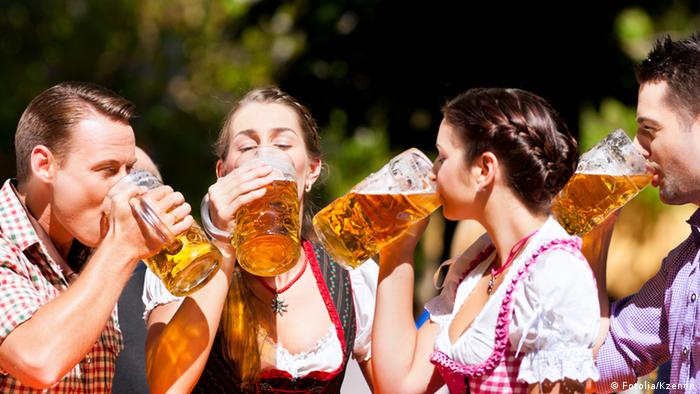
Truth is, Oktoberfest, while a huge draw for international tourists, is actually a fairly specific regional party.  It originates from a wedding celebration for King Ludwig I in 1810 and has morphed into the world's largest fair with 6 million participants annually.

But Oktoberfest is far from the only fest in Deutschland.  Fact is, despite their reputation as a humorless and efficiently boring lot, Germans love to party. As a result from April to October, there are numerous fests held in every city and village throughout the country.  (Not to mention the Christmas markets or the Karnival celebrations that take place in February - subjects for another post.)  You don't have to travel to Munich in September to have a good time - in fact, many Germans avoid Oktoberfest, because it's seen as an event for foreign tourists.

Truth is, a fest can be something as small as a few dozen people on benches at a local platz drinking beer and eating wurst, or it can be thousands of people dancing on benches in unison at the Stuttgarter Frühlingsfest which happens to be the world's largest Spring beer festival.  For the purpose of this post, I'll concern myself with that particular fest, because it was the first we ever experienced.

We'd only been in Germany a couple months, and while I'd heard about the famous German beer fests, I have no idea what I was expecting, but whatever it was, my preconceived notions were blown away upon entering the Wasen.

For starters, I knew it was a beer festival, but I didn't realize it was also basically a carnival.  Midway games and spinning rides that seem designed to separate beer from the enthusiastic consumers dominated the scene.  Aside from the hordes of young people wearing trachten - the traditional Bavarian dress of lederhosen and dirndl -  it at first glance it could pass for an American state fair.  Except instead of cotton candy and fried twinkies there's chili mandeln (sweet, spicy almonds) and mandelbrot (gingerbread) and yes, plenty of wurst.

As we wandered through the midway, we happened upon a rustic-looking faux village area, the centerpiece of which was a rotating bar.  Seriously, a circular bar that spins, albeit quite slowly, allowing passengers to slowly survey the strange scene in front of them. This area is called the Almhuttendorf, or roughly, "Alpine Village  and contains Disneyequse huts selling smoked salmon, traditional sweets, lederhosen, and incongruously, caipharinas.  A band - no, that's generous - a solitary man sings traditional schmaltzy fest songs (schlager) with recorded back-up, but occasionally breaks out into the biggest German fest hit ever - "Country Roads".  Yes, that "Country Roads."  Also "Sweet Home Alabama" is a huge fest hit.  Germans love those songs, I mean, truly adore them.  I still don't have any idea why.

So imagine yourself rotating slowly, surrounded by people in Lederhosen and Dirndls, with fairground concessions and vomit-inducing rides in the background, watching Germans genuinely go absolutely nuts over a guy with a mic singing "Country Roads."  My husband turned to me and quoted Hunter S. Thomspon's classic line about the Circus Circus casino from "Fear and Loathing in Las Vegas",


"...what the whole hep world would be doing every Saturday night if the Nazis had won the war. This was the Sixth Reich."

I have to be honest, it was bewildering, slightly terrifying, super confusing, and yet totally fun.  


At that time I didn't realize we'd only sampled a tiny bit of what the Wasen had to offer.  Namely, the beer tents themselves, the centerpiece of the whole bizarre experience.  I'll write about that more next time, as both the Stuttgarter Volksfest and the Munich Oktoberfest are almost upon us!  Are your lederhosen ready?


Friday, September 13, 2013

Hidden Stuttgart History: A Native Son's Plot to Kill Hitler


The Alte Schloss, or Old Palace in Stuttgart is a beautiful yet imposing building.  Its history goes back nearly 1,000 years, yet some of it's most interesting history has to do with the 20th century.  In the early 1900's, the Alte Schloss was the  home of one of Nazi Germany's more controversial and interesting figures: Claus Schenk Graf von Stauffenberg, a man instrumental in a failed plot to overthrow Hitler known as "Operation Valkyrie".  

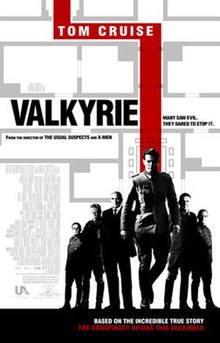
If that name rings a bell, it's because it's the title of the 2008 Bryan Singer film "Valkyrie," starring Tom Cruise as Claus von Stauffenberg.  The movie portrays the formulation of the plot through to its inevitable tragic conclusion, focusing on the dashing Stauffenberg, although in reality there were dozens of co-conspirators, including Claus' brother, Berthold.


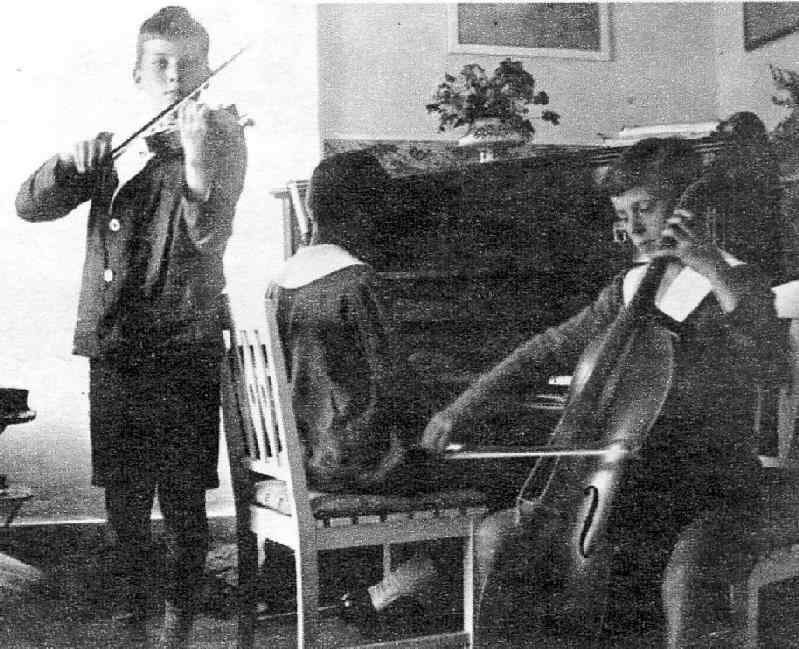
But who was the real Claus von Stauffenberg?  Born into one of Swabia's oldest noble families, Claus' father held the hereditary title of Oberhofmarschall (roughly translates to "Chancellor") of the Kingdom of Wurttemberg, and as a result Claus and his brother spent their childhood residing in part of the Alte Schloss alongside the Wuerttemburg nobility.  Claus was a teenager when the German defeat in World War I and the resulting revolution ended the monarchy - and the privileges of nobility.


Claus and Berthold as children
The brothers left Stuttgart to attend university.  Berthold then launched a career in law, while Claus began what would be a remarkable military career in the Wehrmacht, or German Army.  While both were conservative nationalists who desired a return to the monarchy,  neither of them saw Nazism as a reflection of their values and as such, neither ever joined the Party.


Despite his moral opposition to Hitler and Nazism, Claus von Stauffenberg did not oppose the invasion of Poland, which kicked off World War II in earnest, believing that Poland was meant to be a German colony. His first strong resistance to Nazi war crimes came with Operation Barbarossa, the invasion of the Soviet Union in 1941.  As an Army officer on the Eastern Front, von Stauffenberg was appalled at the ill-treatment and murder of Russians and Jews.  


In 1943 he was transferred to Tunisia to fight in the Afrika Korps, where he was strafed by an Australian fighter plane.  He lost an eye, a hand, and two additional fingers as a result, and was sent home to Schloss Lautingen, one of the Stauffenberg estates south of Stuttgart, to recover.  Despite talk for years of wanting to overthrow Hitler, it was only then, when the war began going very badly for Germany, that von Stauffenberg became active in the plan for a military coup.  Although many have ascribed von Stauffenberg's rationale being a moral conflict with the crimes of Hitler and the Nazis, it was also surely motivated by the fact that Hitler was no longer listening to Army leadership in terms of tactics, and the results had been disastrous for the war.  It was clear to von Stauffenberg and many others in the military that Germany was losing the war, badly, and the only way to end the suffering of the war was to kill Hitler.


Stauffenberg with his future wife in 1933
The details of the plots - there were several  unsuccessful attempts previously - - are complicated but fascinating.  The final July 20th 1944 plot was a plan to unite the German army under high-ranking defectors after the death of Hitler and other high-ranking Nazi officials.  This was actually based on a contingency plan that had in fact been approved by Hitler but modified by the conspirators.  Stauffenberg's role was instrumental as he was the only person involved who had regular personal access to Hitler.  He was to put a briefcase bomb next to Hitler at a meeting of Hitler, his inner circle, and Army leadership at the "Wolf's Lair" base Hitler was operating out of.  Stauffenberg would then leave, and phone his co-conspirators in Berlin to begin mobilizing the coup.


Von Stauffenberg executed his part of the plot perfectly, despite having to arm the bombs with delicate pliers quickly in a bathroom and having but one hand with three fingers - but still it went amiss.  The bomb did in fact go off, and it killed four people.  Unfortunately, it was moved from the spot von Stauffenberg had placed it because another person at the meeting kept bumping into it.  It was then separated from Hitler by a large oak table leg before it exploded, and the heavy table ended up shielding Hitler and saving his life, although his arm was injured in the blast.


Stauffenberg at attention in front of Hitler
The coup still could have succeeded in the confusion following the blast, as many people in leadership believed that Hitler had been killed. A mixture of ineptitude and cowardice by a few key players in the plot resulted in a total mess, which made it easy for the Nazis to determine who was behind the assassination attempt within a matter of hours.  Von Stauffenberg and a number of co-conspirators were executed shortly after midnight on July 21st by an impromptu firing squad. Berthold was executed by slow strangulation a couple weeks later after a show trial.  Virtually everyone connected to the plot was executed, as well as many who had nothing to do with it.  By the end of the summer, over 20,000 people were either executed or sent to concentration camps based on a suspected involvement with the plot, including the families of anyone involved.

The harrowing details of the plot make for an entertaining movie, but for a deeper look at von Stauffenberg as a man, the Alte Schloss has a memorial museum dedicated to the two brothers that's accessed from Stauffenbergplatz, across from Karlsplatz - the starting point of my city walking tour. Artifacts and interactive exhibits illustrate the life of this daring and complicated figure.