Sunday, November 24, 2013

A New Blogging Era Begins

So things have been a bit busy at the Killa Villa since I returned from an awesome trip to the USA, followed by an awesome trip to Greece, all while getting my walking tour company, Stuttgart Steps, up and running.  With all that going on, it's really no surprise that I neglected this blog for a little while.  I even briefly turned it into the "official" blog of my business, but eventually realized I need to have a personal home on the web that was separate from building my marketing social media empire, or whatever.

So anyway, I've resurrected this blog primarily as a place to document my travels and various things I find interesting about the culture and history here.  Assuming I ever write that stuff...I'm still a year overdue for blogging about our epic Balkan trip of October 2012, let alone, well, everything else!

So most of the new posts won't have the current sorta commercial tone of the last few posts, although I reserve the right to cross-post stuff from Stuttgart Steps when I think it's particularly interesting.  And I've changed the name, because puns.


As you can see, I'm still enjoying the high life in Europe.  Be prepared for a whole slew of obnoxious pictures of Grecian cats, German cars, and me getting really excited about Mexican food in Europe.

Saturday, September 14, 2013

What's A Fest?

So the long, horrible, terrible, and again, very long winter is nearly here Southern Germany.  In accordance with ancient tradition, fest season is upon us.  But the term "fest" and the huge varieties of fests are a little confusing to the auslander.  I'll attempt to explain.

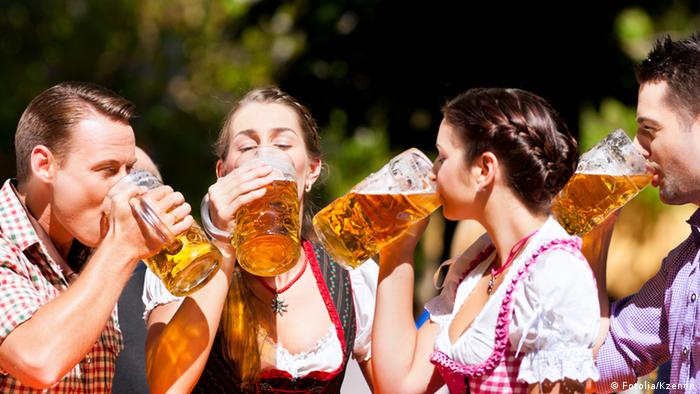
Most Americans have heard of Oktoberfest - that giant beer festival that takes place yearly in Munich (confusingly in September).  But what we tend to know of Oktoberfest is giant mugs of beer and lederhosen, the iconic leather pants.

Truth is, Oktoberfest, while a huge draw for international tourists, is actually a fairly specific regional party.  It originates from a wedding celebration for King Ludwig I in 1810 and has morphed into the world's largest fair with 6 million participants annually.

But Oktoberfest is far from the only fest in Deutschland.  Fact is, despite their reputation as a humorless and efficiently boring lot, Germans love to party. As a result from April to October, there are numerous fests held in every city and village throughout the country.  (Not to mention the Christmas markets or the Karnival celebrations that take place in February - subjects for another post.)  You don't have to travel to Munich in September to have a good time - in fact, many Germans avoid Oktoberfest, because it's seen as an event for foreign tourists.

Truth is, a fest can be something as small as a few dozen people on benches at a local platz drinking beer and eating wurst, or it can be thousands of people dancing on benches in unison at the Stuttgarter Frühlingsfest which happens to be the world's largest Spring beer festival.  For the purpose of this post, I'll concern myself with that particular fest, because it was the first we ever experienced.

We'd only been in Germany a couple months, and while I'd heard about the famous German beer fests, I have no idea what I was expecting, but whatever it was, my preconceived notions were blown away upon entering the Wasen.

For starters, I knew it was a beer festival, but I didn't realize it was also basically a carnival.  Midway games and spinning rides that seem designed to separate beer from the enthusiastic consumers dominated the scene.  Aside from the hordes of young people wearing trachten - the traditional Bavarian dress of lederhosen and dirndl -  it at first glance it could pass for an American state fair.  Except instead of cotton candy and fried twinkies there's chili mandeln (sweet, spicy almonds) and mandelbrot (gingerbread) and yes, plenty of wurst.

As we wandered through the midway, we happened upon a rustic-looking faux village area, the centerpiece of which was a rotating bar.  Seriously, a circular bar that spins, albeit quite slowly, allowing passengers to slowly survey the strange scene in front of them. This area is called the Almhuttendorf, or roughly, "Alpine Village  and contains Disneyequse huts selling smoked salmon, traditional sweets, lederhosen, and incongruously, caipharinas.  A band - no, that's generous - a solitary man sings traditional schmaltzy fest songs (schlager) with recorded back-up, but occasionally breaks out into the biggest German fest hit ever - "Country Roads".  Yes, that "Country Roads."  Also "Sweet Home Alabama" is a huge fest hit.  Germans love those songs, I mean, truly adore them.  I still don't have any idea why.

So imagine yourself rotating slowly, surrounded by people in Lederhosen and Dirndls, with fairground concessions and vomit-inducing rides in the background, watching Germans genuinely go absolutely nuts over a guy with a mic singing "Country Roads."  My husband turned to me and quoted Hunter S. Thomspon's classic line about the Circus Circus casino from "Fear and Loathing in Las Vegas",


"...what the whole hep world would be doing every Saturday night if the Nazis had won the war. This was the Sixth Reich."

I have to be honest, it was bewildering, slightly terrifying, super confusing, and yet totally fun.  


At that time I didn't realize we'd only sampled a tiny bit of what the Wasen had to offer.  Namely, the beer tents themselves, the centerpiece of the whole bizarre experience.  I'll write about that more next time, as both the Stuttgarter Volksfest and the Munich Oktoberfest are almost upon us!  Are your lederhosen ready?


Friday, September 13, 2013

Hidden Stuttgart History: A Native Son's Plot to Kill Hitler


The Alte Schloss, or Old Palace in Stuttgart is a beautiful yet imposing building.  Its history goes back nearly 1,000 years, yet some of it's most interesting history has to do with the 20th century.  In the early 1900's, the Alte Schloss was the  home of one of Nazi Germany's more controversial and interesting figures: Claus Schenk Graf von Stauffenberg, a man instrumental in a failed plot to overthrow Hitler known as "Operation Valkyrie".  

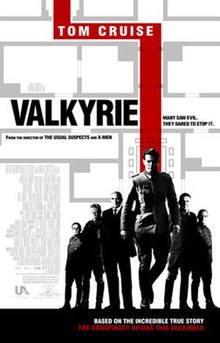
If that name rings a bell, it's because it's the title of the 2008 Bryan Singer film "Valkyrie," starring Tom Cruise as Claus von Stauffenberg.  The movie portrays the formulation of the plot through to its inevitable tragic conclusion, focusing on the dashing Stauffenberg, although in reality there were dozens of co-conspirators, including Claus' brother, Berthold.


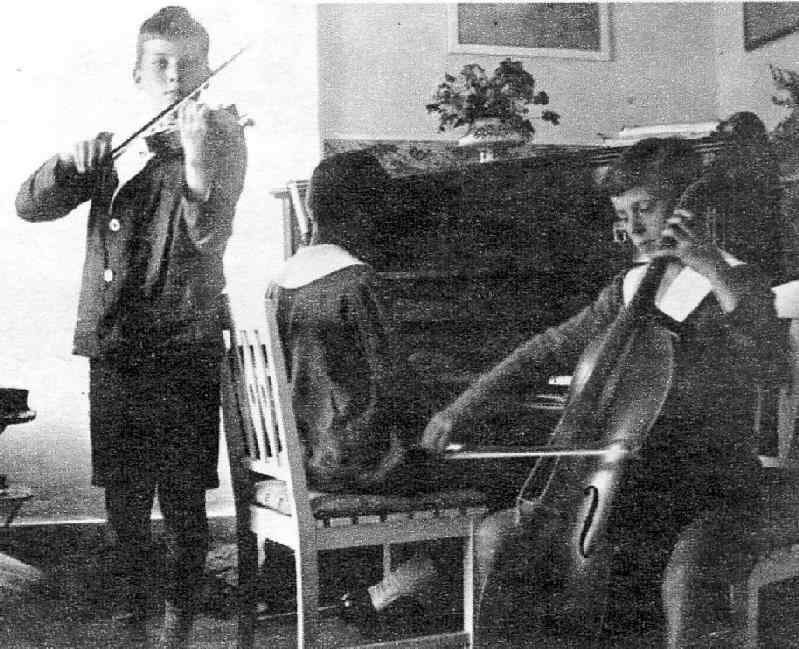
But who was the real Claus von Stauffenberg?  Born into one of Swabia's oldest noble families, Claus' father held the hereditary title of Oberhofmarschall (roughly translates to "Chancellor") of the Kingdom of Wurttemberg, and as a result Claus and his brother spent their childhood residing in part of the Alte Schloss alongside the Wuerttemburg nobility.  Claus was a teenager when the German defeat in World War I and the resulting revolution ended the monarchy - and the privileges of nobility.


Claus and Berthold as children
The brothers left Stuttgart to attend university.  Berthold then launched a career in law, while Claus began what would be a remarkable military career in the Wehrmacht, or German Army.  While both were conservative nationalists who desired a return to the monarchy,  neither of them saw Nazism as a reflection of their values and as such, neither ever joined the Party.


Despite his moral opposition to Hitler and Nazism, Claus von Stauffenberg did not oppose the invasion of Poland, which kicked off World War II in earnest, believing that Poland was meant to be a German colony. His first strong resistance to Nazi war crimes came with Operation Barbarossa, the invasion of the Soviet Union in 1941.  As an Army officer on the Eastern Front, von Stauffenberg was appalled at the ill-treatment and murder of Russians and Jews.  


In 1943 he was transferred to Tunisia to fight in the Afrika Korps, where he was strafed by an Australian fighter plane.  He lost an eye, a hand, and two additional fingers as a result, and was sent home to Schloss Lautingen, one of the Stauffenberg estates south of Stuttgart, to recover.  Despite talk for years of wanting to overthrow Hitler, it was only then, when the war began going very badly for Germany, that von Stauffenberg became active in the plan for a military coup.  Although many have ascribed von Stauffenberg's rationale being a moral conflict with the crimes of Hitler and the Nazis, it was also surely motivated by the fact that Hitler was no longer listening to Army leadership in terms of tactics, and the results had been disastrous for the war.  It was clear to von Stauffenberg and many others in the military that Germany was losing the war, badly, and the only way to end the suffering of the war was to kill Hitler.


Stauffenberg with his future wife in 1933
The details of the plots - there were several  unsuccessful attempts previously - - are complicated but fascinating.  The final July 20th 1944 plot was a plan to unite the German army under high-ranking defectors after the death of Hitler and other high-ranking Nazi officials.  This was actually based on a contingency plan that had in fact been approved by Hitler but modified by the conspirators.  Stauffenberg's role was instrumental as he was the only person involved who had regular personal access to Hitler.  He was to put a briefcase bomb next to Hitler at a meeting of Hitler, his inner circle, and Army leadership at the "Wolf's Lair" base Hitler was operating out of.  Stauffenberg would then leave, and phone his co-conspirators in Berlin to begin mobilizing the coup.


Von Stauffenberg executed his part of the plot perfectly, despite having to arm the bombs with delicate pliers quickly in a bathroom and having but one hand with three fingers - but still it went amiss.  The bomb did in fact go off, and it killed four people.  Unfortunately, it was moved from the spot von Stauffenberg had placed it because another person at the meeting kept bumping into it.  It was then separated from Hitler by a large oak table leg before it exploded, and the heavy table ended up shielding Hitler and saving his life, although his arm was injured in the blast.


Stauffenberg at attention in front of Hitler
The coup still could have succeeded in the confusion following the blast, as many people in leadership believed that Hitler had been killed. A mixture of ineptitude and cowardice by a few key players in the plot resulted in a total mess, which made it easy for the Nazis to determine who was behind the assassination attempt within a matter of hours.  Von Stauffenberg and a number of co-conspirators were executed shortly after midnight on July 21st by an impromptu firing squad. Berthold was executed by slow strangulation a couple weeks later after a show trial.  Virtually everyone connected to the plot was executed, as well as many who had nothing to do with it.  By the end of the summer, over 20,000 people were either executed or sent to concentration camps based on a suspected involvement with the plot, including the families of anyone involved.

The harrowing details of the plot make for an entertaining movie, but for a deeper look at von Stauffenberg as a man, the Alte Schloss has a memorial museum dedicated to the two brothers that's accessed from Stauffenbergplatz, across from Karlsplatz - the starting point of my city walking tour. Artifacts and interactive exhibits illustrate the life of this daring and complicated figure.

Thursday, May 30, 2013

Chilling in Copenhagen

So I have to be honest: so far we've avoided the Scandinavian countries.  This seems silly, right?  They're relatively close, they have a reputation for being welcoming and absolutely beautiful, with clean cities.  Right up our alley!  But there's a reason we've avoided them:

They are freaking expensive.

Nyhavn, the popular tourist area
However, a Danish friend of mine, Rasmus, had been telling Chris and I tales of Danish beer culture for over a year now, and the temptation to sample it ourselves was growing.  While Germany is famous for it's beer, the breweries here are stuck in the 1700's. For Germans, beer is a tradition, and you don't mess with tradition.  As a result, the microbrew revolution that took the U.S. by storm in the '90's never made it to Deutschland.  In practical terms, what does that mean for a California girl like me?  No IPAs.  No pale ales at all.  Not many ales in general, actually. Hopheads need not apply.  We've driven hours to pay €4 per bottle for some Sierra Nevada Pale Ale, and once in a blue moon we'll come across a few bottles of Anchor Steam beer in Berlin, but in general it's noch ein pils, bitte.  Bor-ring.

So when Rasmus told me there was a beer festival in Copenhagen he was attending with some friends, it seemed like a good opportunity to dip our toes in the Scandinavian water.  With a few people, we could save money by renting an apartment and having some meals there.  So we bit the bullet and bought our tickets.

And after 4 days in Copenhagen I have to say, it is a really beautiful, amazing city that I'd love to spend more time in.  But it really is that expensive.  Especially compared to Germany, which doesn't get enough good press about what a great travel deal it is compared to the rest of Western Europe. Even grocery shopping gave us some sticker shock - a six-pack of cheap beer set us back over $10 - but everything, from admissions fees to restaurants to public transit to bars cost about double or sometimes even triple what you'd expect to pay in Germany.  Get ready for $20 hamburgers.

In anticipation of these costs, I did some research and found the Copenhagen Card, which entitled us to entry at virtually every attraction and museum in Copenhagen, as well as public transit within the eastern side of the island of Zealand, including the Viking ship town of Roskilde, and "Hamlet's Castle" at Elsinore. The card costs $90 for 72 hours of validity, which was steep enough to make my heart skip a beat at first.  Once we did the math, though, we realized the card saved us a ton of money.
Something is awesome in the state of Denmark!
Upon arrival at the swank Copenhagen Airport - more like an upscale mall - we took the very clean and
cool pilot-less Metro to our apartment, and then walked to the former industrial, now yuppie neighborhood of Christianhavn.  Within minutes of our arrival in town, we'd passed hipster art galleries, beautiful flower stands, dozens of bicycles, and fish markets redolent with the smell of smoked herring.  Way to play into (positive) stereotypes, Danes!  We spent the next several hours enjoying the sunny, if breezy weather on a self-guided walking tour of the city.  At the picturesque canal known as Nyhavn, we eschewed the expensive tourist cafes and did as the locals do and bought a cheap, giant can of Viking beer and drank it sitting on the pavement in front of historic sailing vessels, and enjoyed the famous ristet hot dog for a snack.  (The hot dog comes with katchup, mayo, remoulade, fried onions, and pickles - seriously tasty junk food!)  By the time our friends arrived, we were all too pooped for nightlife, so we hung out in our apartment and marveled at the Nordic summer - it wasn't fully dark until 11:00 p.m. in May!

The next day we headed to Roskilde, the former capital of the Danish Kingdom and home to the Viking Ship Museum.  The Cathedral in Roskilde is Denmark's Westminster Abbey - the entire royal family is interred there, from the famous Viking Harald Bluetooth to the current queen when her time comes.  It's somewhat morbid, but there's even a model of her tomb on display.  With amazing art and architecture spanning nearly a thousand years, it's a must-see.
Wannabe Vikings!

From there it was a pleasant walk through a park to the Ship Museum, which is set in a picturesque inlet, formerly the site of many raids and battles.  It's theorized that five ships were scuttled there to create a blockade for would-be invaders.  The ships were discovered and excavated in the 1950's and the find was instrumental in changing perceptions about what had previously been thought to be myths about the ability of the Vikings to sail to far-off places such as Greenland and Canada hundreds of years before Columbus.  It's very much a living history museum, as replicas of the ships have been made using Viking shipbuilding techniques.   The replicas were taking visitors for a sail out in the bay, and there were rope making classes and other interactive exhibits for young people.  The museum and the original ships on display were amazing, and we got some fun photos dressing up in viking costumes as well.

Tivoli Gardens
In the evening we went to Tivoli Gardens, the world's second-oldest amusement park (the first is just ten miles away in a Copenhagen suburb).  The Gardens are smack in the heart of Copenhagen, between the main train station and the town hall - unusual to an American perspective, but very convenient to pop in for a brief stroll.  At nighttime the park is just gorgeous, illuminated with over 10,00 lights and lanterns.  Unfortunately the admission included with our Copenhagen card did not cover the cost of rides, so I spent over $10 to ride the incredible looping "Demon" coaster, while my more frugal friends sat it out.  There was also a big free concert going on that night of some famous Danish rock star from the '80's.  In addition to being one of the city's largest music venues, Tivoli also houses a couple of the city's most celebrated restaurants, including one with two Michelin stars.  Knott's Berry Farm this isn't!

Saturday was the beer festival itself.  Rasmus insisted we arrive close to opening at noon, before "the good stuff sells out."  And it wasn't that I disbelieved Rasmus about the variety and quality of Danish beers, but what he'd told me failed to prepare me for what I'd find.  There were dozens of breweries as well as distributors, selling primarily Danish beer but also some international options.  The Danish beers themselves obviously had once had a lot in common with the westcCoast beer revolution - there were many, many IPAs, double IPAs, and other hoppy wonders, many bearing the description of "American style" or "West Coast style" but there were also beers that didn't resemble anything I'd seen in the States:  Black IPAs, Nordic summer sales, bitter lambics, fusions of American and Belgian styles, barleywines - you name it.  And it was fantastic.  At first I didn't think our 10 taste tokens of 0.1 liters each would be enough to satisfy us for several hours, but given how strong in both taste and alcohol content most of the beers were, 10 tastes ended up being quite enough for us.

The cutest puppy ever, yes you are!  Yes you are!
After breaking for a cheap and greasy pizza lunch, our friends headed back into the festival, but we the crowds had gotten to be a bit much for us, so we parked ourselves at a local Carlsberg beer garden and enjoyed some boring but relatively cheap bottles of beer from Denmark's most famous brewery, and maybe a little bit of akvavit, a classic caraway-flavored Scandinavian spirit that Chris introduced me to back in the states. We watched the most adorable Jack Russel Terrier prance around and making new friends with some drunken Swedes.

Eventually we reconvened to get more hot dogs and annoy everyone on our train with our slightly inebriated antics (my husband's ability to imitate accents does not get better with akvavit, it turns out, but good on ya, Bruce!).  We met up with some of Rasmus' Danish friends to go to a beer bar in one of Copenhagen's hipster neighborhoods and watch the end of the big FC Bayern vs. Dortmund football game.  Inside, I spied a beer I really like, West Coast Brewing Company's Green Flash Pale Ale, and immediately requested a bottle, but Chris had already purchased two large bottles of Lagunitas Brewing Company's Hop Stoopid Ale.

Now this is a beer that's hard to find outside of specialty beer shops even in Northern California.  The fact that I could buy it in Copenhagen?  Amazing.  Even after a day of fantastic beer, it was like home in a bottle.  I may have gone off on a tipsy ramble reminiscing to a bunch of uninterested Danes about the beauty of sitting on the banks of the Russian River, looking at redwoods, watching kayakers, while drinking this beer, which is so amazingly balanced and beautiful and....whoops, I'm doing it again.  Oh yeah, and each beer cost $22.  Copenhagen giveth and taketh away (our money).

We didn't linger at the bar and instead took our bottles to go, enjoying the relatively warm evening, while the hipsters rode by on their bicycles and bicycle-like-contraptions rigged up to hold dogs, flats of beer, and even people.  It seemed like everyone was out and about, giggly girls attempting to foist free hot dogs on passerby, football fans, hippies...a real urban slice of nightlife.  In fact, back at our apartment, some neighbors were having quite the party, which apparently went on until it got light again at 4:00 a.m.  When was the last time you partied from sunset to dawn?  It's not hard to do during a Scandinavian summer.  I kept waking up at ungodly early hours, convinced I'd overslept, only to see that it was just 5:00 a.m.  It's just that bright that early.
Me and the old stock exchange and palace

The next day our blissful weather ended, and we woke up to rain and a bit of a hangover.  I'd caught a cold the previous day as well (which I probably gave to our entire group, as they all insisted I try their beer samples and vice-versa).  But it was our last day in town and we were determined to get a good value for our Copenhagen Card, so we took a boat tour of the harbor and canals, hit the National Museum which was great but disappointingly short on Viking history, and the Ny Carlsberg Glyptotek, an amazing and beautiful museum from the private collection of the Carlsberg brewery's founder.  After a late lunch of smørrebrød (Danish open-faced sandwiches - turns out I'm not a fan of herring in any form) it was time to head back to the airport.

Overall Copenhagen struck me as both a thriving metropolis with tons for the tourist, but also a very lovable city for the resident.  More beautiful than Berlin, more laid-back than Paris, more livable than London - but unfortunately, more expensive as well.  Maybe someday I'll hit a windfall and be able to get those sought-after Noma reservations and I'll be able to return and experience the swanky side of Copenhagen.  Here's a gallery with the rest of our pictures!

Tuesday, May 21, 2013

Eurovision: The Glory, The Drama, The Cheese

There are two major events that draw Europeans together that Americans know little or nothing about.  The first is EUFA (Union of European Football Assocation) tournaments that pit countries against each other on the pitch.  The second is Eurovision, a song contest that pits countries against each other in an attempt to stay on pitch.  Many people give credit to the European Union for ending millenia of near-constant intra-European war, but I think it's fair to say that the competitive arenas of football and regrettable pop songs allows Europeans the ability to feel their hearts warmed with patriotism in a way that won't lead to invading the low countries.  (Americans have no need for this, as we are patriotic 24 hours a day, 365 days a year...and we still sometimes invade countries.)
Irritating Euros with patriotic fervor every day.

Unlike football, Eurovision is not loved by all Europeans - particularly the British, who have a decades-long history of mocking the contest. In general it doesn't poll well with young heterosexual men from Western European countries who think they're too cool to get into the spectacle, or are afraid showing the slightest hint of interest in the show will infect them with teh ghey.  Screw those guys.  Eurovision is awesome, and Americans should love it, too.


Here's why Americans should give Eurovision a chance:

1. It's kinda like the Oscars or Grammys, except not boring, no Billy Crystal, and with better outfits.  Remember that one year Bjork wore a swan dress?  In Eurovision everyone is Bjork every single year all the time, and it's glorious.

2. Despite the fact that Europeans consume all our pop culture just as voraciously (if not more so) than we do, Americans often feel culturally inferior to those fancy-pants Euros.  Watching Eurovision will certainly leave many Americans with a smug sense of artistic superiority.
He's in a suit, so it's classy.

3. The lingua franca of Eurovision is English.  That is, the presenter, jury representatives, and many of the songs are in English.  Sometimes in very good English.  Sometimes in horribly mangled English.  This is funny.  It doesn't matter that the vast majority of Americans are shamefully monolingual.  It's still funny.

4. It's quite satisfying to have your secret stereotypes about various European countries confirmed vis a vis song and dance numbers.

5. It's educational.  Come on, tell me, did you really know that San Marino was a country?  I bet you didn't!  But if you watch Eurovision you might even be moved to figure out where Azerbaijan is, and how to spell it.

6. It often stirs up actual geopolitical news.  This year alone, the girl-girl kiss at the end of Finland's performance prompted Turkey not to air the show, and spurred outraged newspaper headlines in many conservative countries.  Also, Russia's Foreign Minister is demanding an investigation into the voting process over what he believes are stolen votes from former Soviet Republic Azerbaijan.  Seriously.

7.. This happened:
#welcometoeurope

All this sounds like I'm encouraging Americans to watch Eurovision to mock it, but in all honesty, my love for Eurovision is completely unironic.  I don't think it's "so bad it's good" but rather that it's a hugely entertaining show with a mix of genuinely great songs and performances and yeah, a few cringeworthy segments.  Watching the video of last year's winning song, "Euphoria," I'm reminded how thrilling it can be when infectious techno-pop, strong vocals, sweet dance moves, and serious stagecraft all come together for a few glorious minutes while bringing a whole continent together (except for the boring straight guys).


Friday, May 10, 2013

Kicking It In Köln - Part 1

Never heard of Köln?  It's only Germany's fourth-largest city.  This is one of the few major cities in Germany, along with München (Munich) whose actual name in German is very different than the name you probably know the city by - Cologne.  "Köln" with the unique umlaut "O" sound is quite difficult for non-Germans to pronounce correctly.  "Kueln" said with pursed lips for the vowel part comes close, but I'm assured by German friends that I'm still not saying it correctly. 

The park along the Rhine, with the Hohenzollern bridge in the background.
Somewhat strangely, Köln is a tourist hub, despite having only one year-round claim to fame - it's massive cathedral  Germany's largest and also it's most visited tourist attraction, period.  Köln's other major attraction is it's Karneval, which is basically German Mardi Gras celebrated before the start of Lent towards the end of winter. Köln has the strange distinction of being a heavily visited city that largely lacks in touristic charm and attractions, more a function of it's convenient location as a transit hub.  Most visitors are day-trippers, stopped over on their way somewhere else, or convention traffic.

Our reasons for visiting were different.  My husband is a big fan of the Oakland, California based hip-hop group "The Coup" and Köln was their only German tour date.  Since we'd never made it all the way up there, we decided it was a great opportunity to visit a city we'd meant to get around to seeing and hadn't yet.  Besides, I'm a certified old cathedral nut, so I had to make the pilgrimage. 

After the comfy two-hour ICE train ride, crossing the Rhine over the Hohenzollern bridge, which is the most traversed train bridge in the world, we arrived early afternoon on a gorgeous sunny spring day.  The weather in Stuttgart hadn't been nearly as nice, so the clear blue skies and t-shirt weather certainly gave Köln a bit of a sparkle.  

That said, it was very clear we weren't in Swabia anymore.  The public transit system there is a bit bonkers, with outdated U-Bahn trains and largely non-functional ticket machines.  The Rhineish cuisine is so different from what I'm used to that I largely couldn't decipher any menu that was off the tourist track. Köln was bombed heavily during WWII, but unlike many cities in Germany, it was largely rebuilt in the style of the times, so the city features a lot of fairly unpleasant modern architecture from the 1950s through the '80s, with very few buildings even in the historic center of town being rebuilt in the old style.  Stuttgart also gets a bad rap for this, but aesthetically Stuttgart is far lovelier than Köln.  And then there's the issue of the tiny beers - even though Kölners are famously proud of their light, hoppy lager style of brew, referred to as Kölsch, they come in tiny glasses that fit only 0.2 liters of the delicious brew.  In theory, brusque but efficient Kölnish waiters are supposed to refill these small glasses constantly, without asking - you place your coaster on top of your glass to signal you don't want another - but in reality the waiters were taciturn but not particularly fast when it came to refilling your beer.  Running out of beer and having to wait isn't usually a problem in a country where often the standard size is a half-liter.

Those quibbles aside, the sun was shining, the Rhine was sparkling, and the beer was refreshing, all of which gave Köln a lovely air, at least on this particular weekend.